Making the textile sector smarter — from production to recovery
Ten years of running a sustainable D2C yoga wear brand taught me the hardest part happens after the sale.
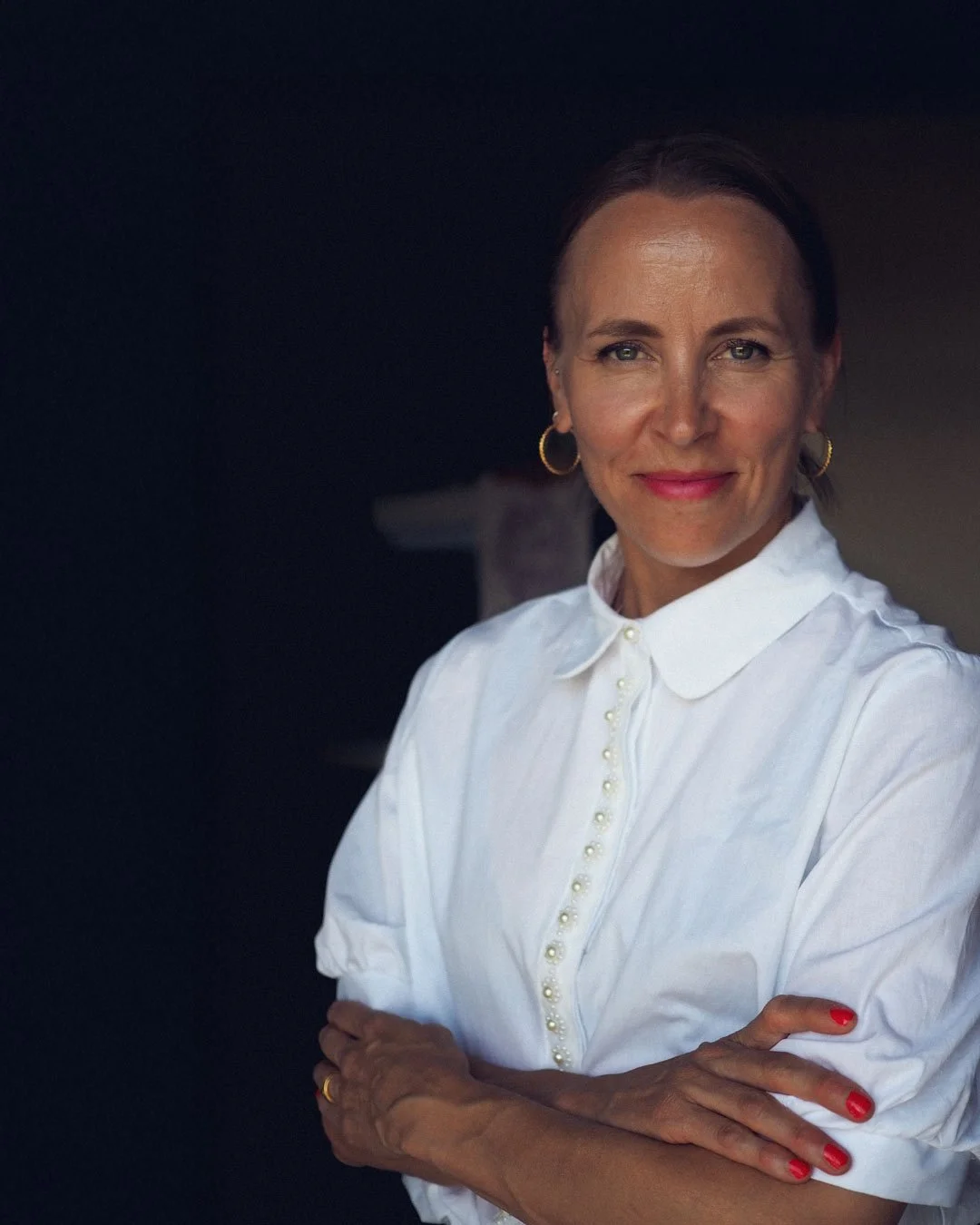
Hi, I am Inkeri Glova
Founder of Arctic Flamingo Yoga Wear
Master of Administrative Sciences (Public Law)
Finnish, in Germany since 2012
82398 Polling / Munich, Germany
+49 15738467670
inkeri.glova@gmail.com
I'm no longer interested in just building the perfect sustainable product.
I want to help build the businesses and solutions that make sustainable textile production more profitable and efficient — and ideally help keep that production here in Europe.
That's the hard part. That's the part I want to work on.
What I did at Arctic Flamingo, 2016–2026:
1. Built the most sustainable products I could, and ran a brand.
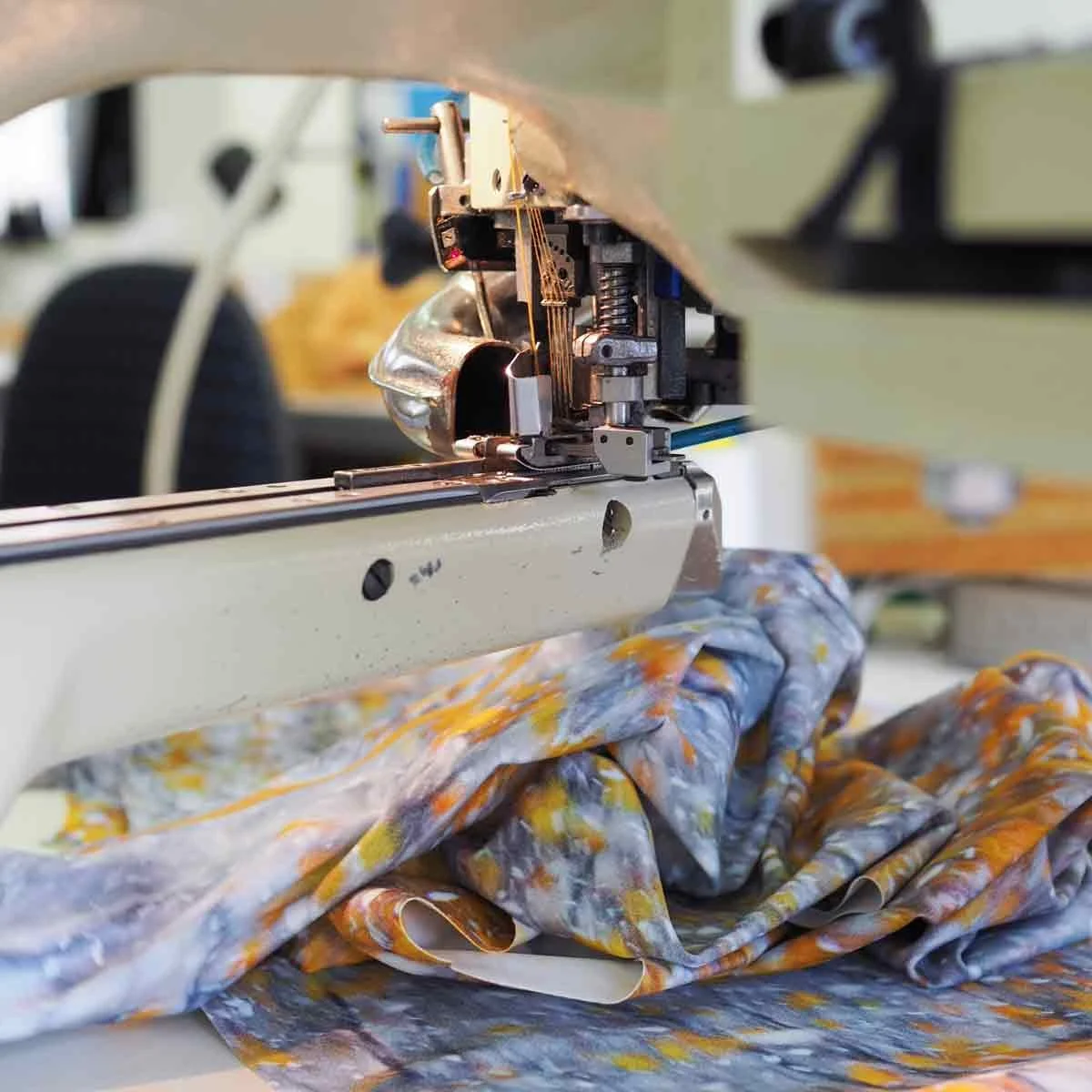
I founded Arctic Flamingo in 2016: yoga wear made in Germany from recycled materials, sold direct to 10,000+ customers. I designed the products, chose the fabrics, ran production with two sewing facilities in Saxony, and priced it to survive.
The material trap
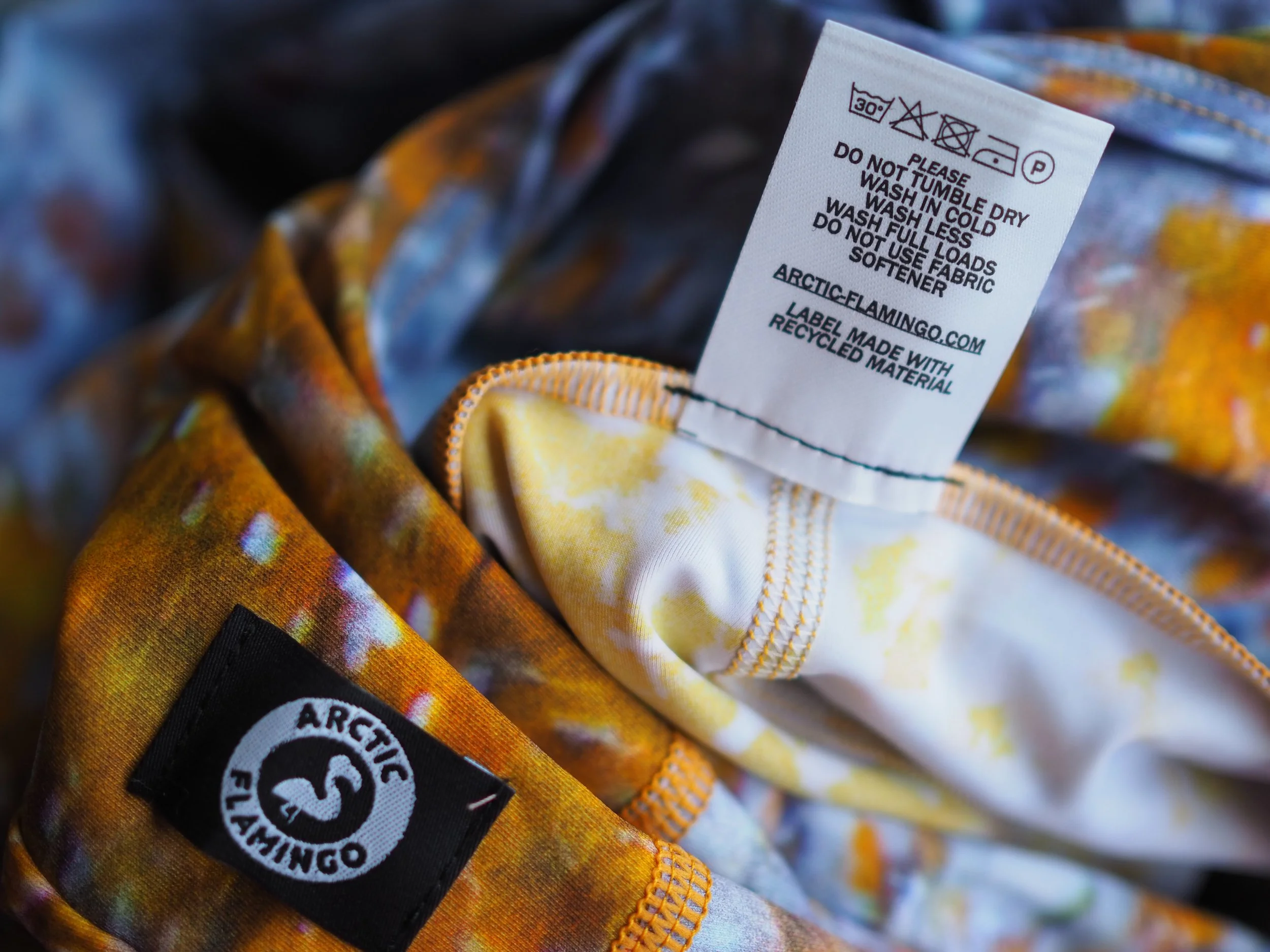
Sportswear taught me a contradiction I've never seen resolved. The "sustainable" choice available to me was recycled input, not recyclable output. Recycled PET, regenerated nylon, lyocell, nylon made from castor oil, biodegradable nylon — all genuine improvements on the input side. But activewear needs stretch, which means elastane, and once a fibre is knitted into a blend, fibre-to-fibre recycling can't separate it again.
The better the fabric performed, the less recyclable it was.
The natural fibres carried their own contradiction. The ones I tried didn't last as well — they pilled, lost shape and faded sooner. A garment replaced after two years instead of six is not the sustainable option, whatever its fibre certificate says. Durability is a sustainability property, and it's the one the industry talks about least because it's the hardest to put on a label.
I made these choices for ten years, with real money, and never found a clean answer. That's not a failure of effort — it's structural, and it gets decided at the material stage, years before anyone opens a take-back box.
That's the kind of problem I want to work on now — not by designing another product, but by helping build the systems that make these decisions smarter from the start.
Arctic Flamingo – Highlights & Outcomes:
- Designed and developed 48 physical apparel products
- Served over 10,000 customers
- 97% five-star reviews
- Up to €150,000 in annual revenue, with zero advertising spend
2. Built a take-back system and a second-hand shop in Shopify
I ran it by hand, so I know exactly how much work it costs:
Every returned item had to be received, inspected, assessed for condition, sometimes washed, then described, photographed, priced and listed — all of it manual, all of it by me. That works at the scale of one small brand and collapses immediately above it. Every step of the reverse logistics process carries cost.
Honest about the size of it:
At my scale, take-back is closer to sustainability marketing than to a business model. There simply aren't enough Arctic Flamingos out there to build a business case on resale alone. Through our second-hand shop, we found a new owner for over 500 unique items.
Why this makes me useful:
I've been on both sides of a garment's life. I chose the fibre, wrote the product data, sold the item to the customer, took it back years later, and decided what it was still worth. The same garment, both ends. That's the loop most people only ever see one segment of. It means I understand why people return things and what they expect in exchange, where the bottlenecks in a take-back and resale programme actually sit, and which parts of this work are worth automating versus which only look that way in a demo.
It also means I've done real business development without a safety net — building the trust and customer relationships this loop depends on, with no team and no ad budget behind me.
The question I keep coming back to:
How do you make a business case for something this labour-intensive? Machine vision for fibre identification and defect detection. Condition grading against a consistent standard, instead of one tired person's judgement in a hurry at 4pm. Automatically generated listings and data-driven pricing, so the handling cost stops eating the item's value. The technology side is only half of it — the harder part is convincing brands and partners that investing in this loop is worth it before the business case is obvious. And with digital product passports coming through EU regulation, the identification question may at least get answered upstream — though only for what's made from now on, and never for condition.
Take-Back and Second Hand Highlights
- Over 500 unique items were taken back and resold as second hand
- Around 100 items were sold as B-Ware / Factory Seconds
- Average contribution margin per resold item: €25
- Combined, these 600+ items generated approx. €15,000 in additional income — value recovered from garments already sold once
Where I fit
I'm looking for work on making the textile sector smarter — digitalisation, automation, business development, and materials built to be recovered — in a team or on a contract basis, whichever fits the organisation.
Where I think my skills and personality would be most useful:
Digitalisation and automation across the textile lifecycle
Helping brands, manufacturers, or tech companies replace manual, fragmented processes — sampling, sorting, condition assessment, listing — with digital tools and automation.
Materials and design decisions that account for end-of-life
Working with brands or material innovators on the question I never got a clean answer to: how to design and choose materials that perform and stay recoverable — instead of treating recyclability as an afterthought.
Country manager or market entry, Germany
For an international company bringing circularity or textile-tech into the German market: someone who knows what German customers expect, how regulation lands here, and how German business culture works day to day.
Partnerships and business development, textile-tech or circularity
Companies in this space live or die on trust from brands, manufacturers, and collectors. Winning and keeping those relationships means being credible to both the technical side and the traditional textile business side.
Regulation, without the panic.
I hold a Master of Administrative Sciences in public law and public administration. The end-of-life side of textiles is being reshaped right now by regulation — Ecodesign for Sustainable Products, digital product passports, extended producer responsibility, rules on environmental claims — and most people in the industry experience this as fog. I read it as a framework rather than a threat, and I've already applied it as a business owner who had to make sustainability claims that would survive scrutiny.
What I bring that isn't obvious from the story above
Germany — Finland — Global
Finnish, running a business in Germany since 2012 — I know what German customers expect and how German business works. I operate in Finnish, German and English, with a handful of other European languages at reading level. Useful in both directions: Nordic companies entering Germany, German companies looking north.
Beyond mass production, and beyond one region. The shift toward microfactories — made-to-order, faster turnarounds, production closer to the customer — doesn't just cut waste, it changes where production can happen. Instead of textiles concentrated in a handful of low-cost mass-manufacturing hubs, smaller-scale, on-demand production can exist closer to where the demand actually is — in Europe, in Asia, anywhere. I know the alternative firsthand: guessing volumes months ahead, producing far from my customers, and living with what didn't sell.
Ten years of owning outcomes.
Product, production, pricing, compliance, customers, cash. Nobody above me to escalate to. That's the part of self-employment that transfers to any team: I'm used to decisions having consequences I have to live with.

Education
Master of Administrative Science
Major: Public Law
Minor: Business Law
University of Vaasa, Finland, 2002-2008
Basics of Service Design 3 ECTS
June 2025, Aalto University, FinlandIntroduction to Responsible Business 4 ECTS
June 2024, University of Jyväskylä, FinlandGreen Marketing 5 ECTS
October 2024, Turku University of Applied Sciences, FinlandSustainable Packaging and Textiles 26 ECTS
May 2025, Tampere University of Applied Sciences, Finland
Recent Online Studies:
Finnish — native
German — fluent; I've run a business entirely in German since 2012
English — fluent
Spanish, Russian, French, Italian — studied earlier, reading level today
Language skills:
E-commerce & web: Shopify, WordPress, SEO/GEO, basic CSS and HTML
Design & visuals: Webdesign, branding, Photoshop, Lightroom, photography
Tools and other skills:
Trade fairs I've attended to hear what the industry is actually talking about 2025-2026: